Blogs
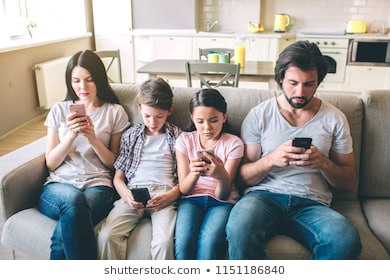
Social networks are designed to make us "addicted". Top 5 questions for you and your children.
Do you remember yourself as a teenager? Was it really "complicated"? This is the status most often seen in today's teenagers' social media profiles.
Being a teenager is always tough. Being a teenager in 2019 is even tougher.
Not only does he face the physiological and psychological challenges of age, but he also faces the artificially created need to be on social media 24/7, like the "sword of Damocles" hanging over him.
Also read:
Recent studies show that 95% of teenagers have a smartphone or access to one, and 45% of teenagers reported that they are online constantly. 51% of teenagers use Facebook, and YouTube and Instagram are equally popular.
Social networks are created for us to be "dependent". And that's the bad news; the good news is that social media can become a trainer and help identify weak points as well as hone critical thinking skills. Let's go into more detail:
- That people and teenagers, in particular, feel excitement when they receive "likes" is normal, but it's bad when they start comparing themselves to others and try to distort or hide their true emotions, events, their life. Especially dangerous is social media for people with low self-esteem, because comparing oneself to the idealized image of "social media friends" (since we don't know what it's really like) worsens mood, well-being, and lowers self-esteem even more.
- Addiction to mobile phones or social networks is of course not the same as drug addiction, alcoholism, etc. BUT since teenagers are still developing cognitively, the manifestations can be more intense than in adults. We're talking about anxiety, apathy, or feelings of loneliness.
There are several markers to pay attention to, which are relevant not only for teenagers but also for your adult child, friend, or relative:
- A sharp increase in Internet time (usually at the expense of not fulfilling duties, assignments, or neglecting hobbies, etc.)
- Strongly encourages others to use social media at school or work (usually aware of the potential negative consequences)
- Concerned about being online all the time
- Feels strong irritation or frustration when unable to access the Internet
Also read: Why it is important to allow a child to be angry and how to do it correctly. .
It is important to understand that because of their age, teenagers desperately need group belonging and social recognition, so it's crucial to show the difference between illusion (social media) and reality (life). Here are 5 questions that, when answered, can help a teenager view the situation from a different perspective, and indeed, it might also be useful for adults to ponder:
- Who do I enjoy communicating with in real life? How do I feel, and what is my mood afterward?
- Am I managing to fulfill my responsibilities, lessons, assignments, and do I have enough time for hobbies?
- When I am sad that I'm offline, what can help me feel better?
- What is good in my life that I can be proud of?
- What new things have I learned about myself while answering the first 4 questions?
Even if a teenager insists that they are a "black sheep" and the only one among their peers who eats/sleeps without a phone, stay strong, dear parents, relatives, and friends. And remember the old English proverb: "Do not raise children, they will anyway be like you. Raise yourself."
Also read: If you need psychological help urgently, confidentially, and without leaving home, then it's only online. .
iPsycholog - Your psychologist online.
How to order a free consultation?



Fathers and daughters
The 1st of September is coming soon. Top 3 ideas for adapting to a new team.
When Your Child is a Troubled Teenager: How to Maintain Relationships.
Once upon a time, on a fine day, any child, even the most well-behaved, pleasant, sweet, kind, responsive, and hug-loving one, turns into a "thorn" and in both the literal and figurative sense, expels the recently dearly loved parents from their space. And this can certainly be confusing and sometimes just infuriate the parents.

"My life is my responsibility and only I choose…"